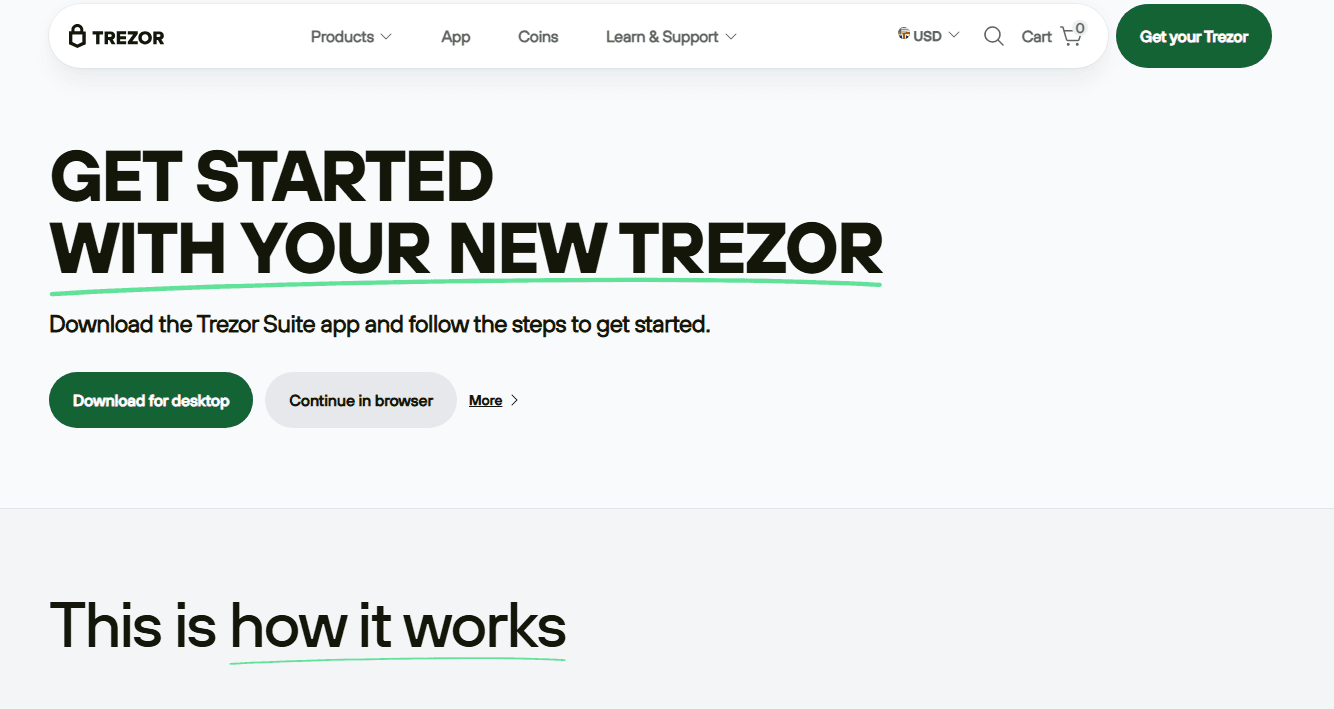
Trezor.io/Start – Complete Setup & Beginner Guide
Introduction to Trezor Hardware Wallet
Trezor is one of the most trusted hardware wallets in the cryptocurrency world, designed to provide users with maximum security for storing digital assets offline. Unlike software wallets or exchange wallets, a Trezor device keeps private keys in a secure, isolated environment. This ensures your crypto remains safe from online attacks, malware, and unauthorized access.
The official setup process begins at Trezor.io/Start, where users download the companion software known as Trezor Suite. This platform allows you to manage cryptocurrencies, send or receive coins, view portfolio balances, and integrate advanced security options like passphrase protection.
Step 1: Visit the Official Setup Page
To begin, connect your device and go to the official setup page by typing Trezor.io/Start into your browser. This directs you to the authentic portal, where you will find download options for Trezor Suite. Make sure you are visiting the legitimate website and not using any third-party or modified application, as this could lead to potential scams or security breaches.
Step 2: Download Trezor Suite
Trezor Suite is available for Windows, macOS, and Linux. It is mandatory to install this software before operating your hardware wallet. After downloading:
Install the application based on your operating system.
Launch Trezor Suite and connect your Trezor device using the USB cable.
Accept the device detection prompt.
Once connected, the software will automatically check whether the firmware on the device is up to date.
Step 3: Update or Install Firmware
New Trezor devices usually come without firmware pre-installed for security purposes. Trezor Suite will prompt you to update or install firmware. Confirm the update on both your computer and device screen. Never install firmware from any unofficial source; always allow the update process to be handled directly through Trezor Suite.
Step 4: Create a New Wallet
After updating the firmware, you will see two options:
Create a New Wallet
Recover Wallet
To set up a new wallet, select Create a New Wallet. The software will then generate a unique crypto wallet with secure private keys held exclusively in the Trezor device. You will then be asked to back up your recovery seed phrase.
Step 5: Back Up Your Recovery Seed
The recovery seed is the most critical part of owning a hardware wallet. It consists of 12, 18, or 24 words displayed on your device screen only once. This seed phrase can recover your wallet if your device is lost, damaged, or reset. Make sure to:
Write it down on paper or a metal backup (never digitally)
Store it offline and in a secure location
Never take a photo or save it on cloud/email
Never share it with anyone
Your seed phrase is the master key to your cryptocurrencies. Anyone with access to it can control your funds.
Step 6: Set Up a PIN
After securing your seed, you will be asked to create a PIN code for your device. This PIN provides an additional layer of security by locking access to the hardware wallet itself. Choose a PIN that is hard to guess but easy for you to remember. Avoid simple combinations like 0000 or repeated numbers.
Step 7: Access Your Wallet within Trezor Suite
Once the PIN is created, your Trezor wallet becomes accessible through Trezor Suite. You can now:
Check your portfolio balance
Receive cryptocurrency
Send cryptocurrency
Trade or exchange supported assets
Enable advanced security options like Passphrase
Security Features in Trezor.io/Start Setup
1. Secure Chip & Firmware
Your device uses high-grade hardware protection with open-source firmware, ensuring reliability and transparency.
2. Offline Private Keys
Private keys never leave the device, keeping them protected from internet risks.
3. Passphrase Protection (Optional)
You can add a passphrase that acts as a 25th word on top of your seed phrase, creating another hidden wallet. Only enable this if you are confident in managing extra security.
4. Open-Source Transparency
All cryptographic processes are open source, allowing global review and validation for safety.